
September, 2025
Recently I decided to look in a new direction – using glazes to create texture. This has opened up new horizons and challenges to my work.
My signature work incorporates craving, cutting and impressing textures directly into the soft clay (Figures 1, 2). During my 25 years as a ceramic artist, these textures have created what I call “decorative function art.” My work can used as a vase, plate, bottle, or platter, but are often prized as standalone decorative art. (Figures 3, 4)
Click images to enlarge.
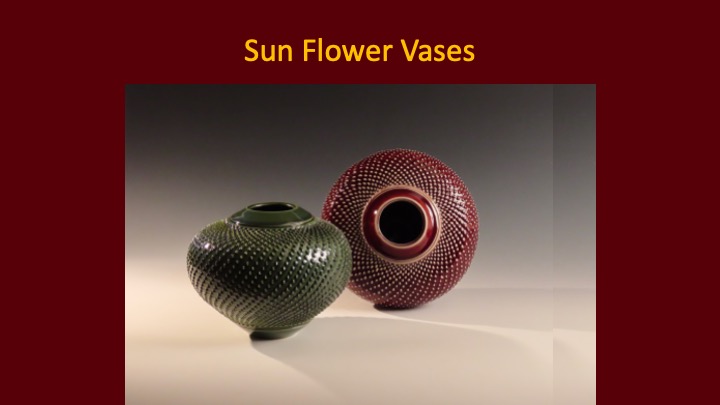
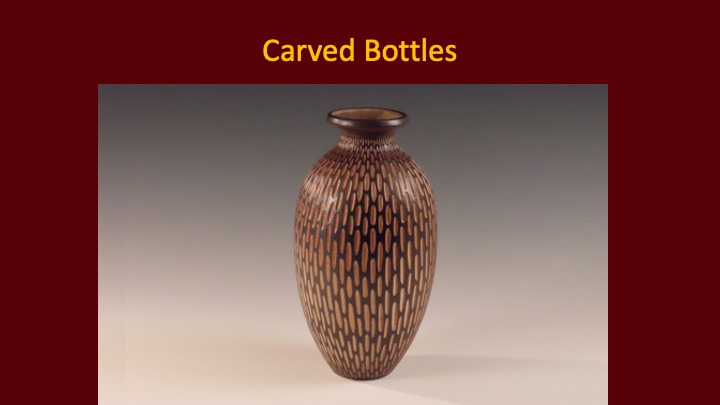
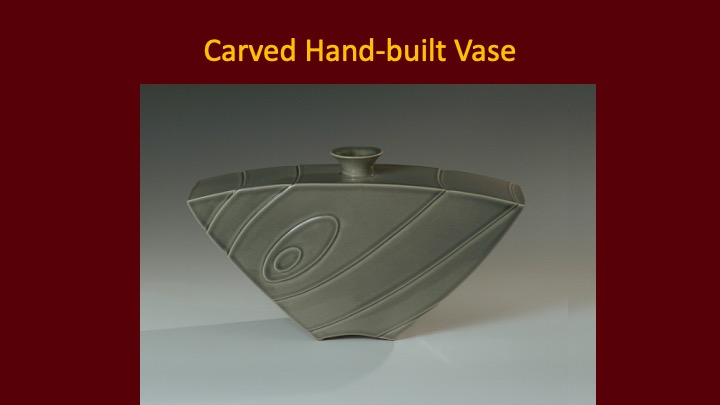
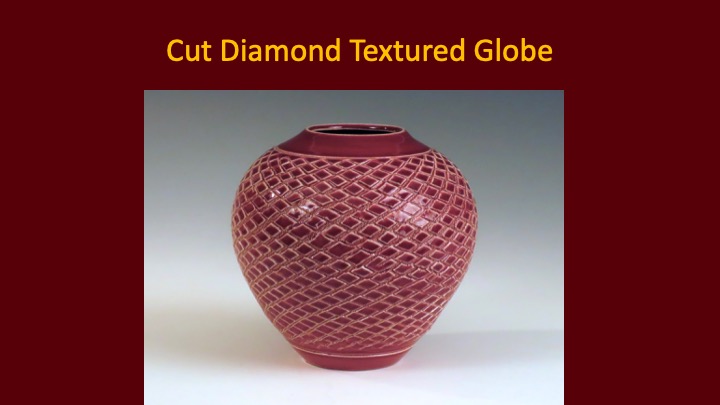
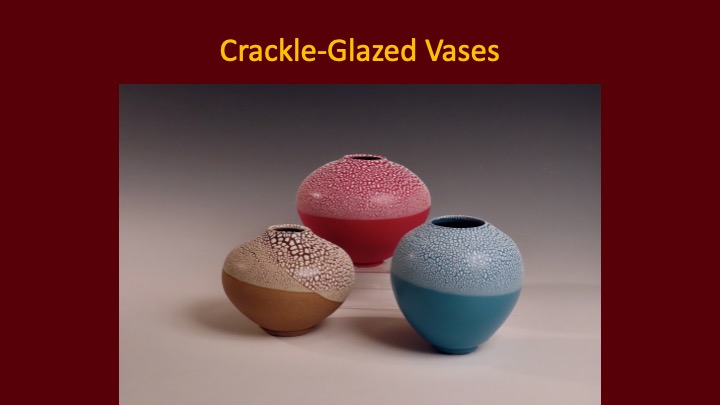
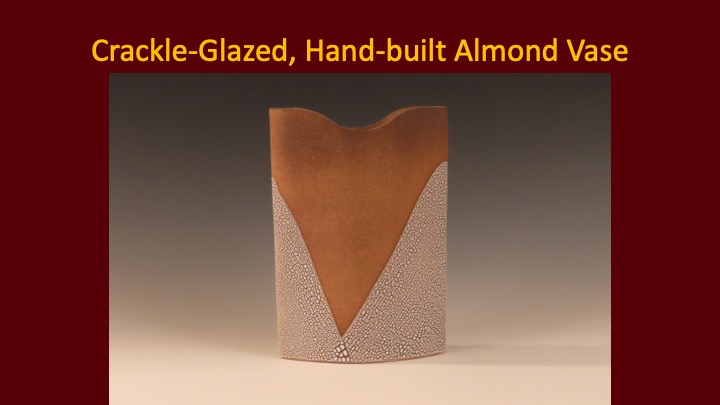
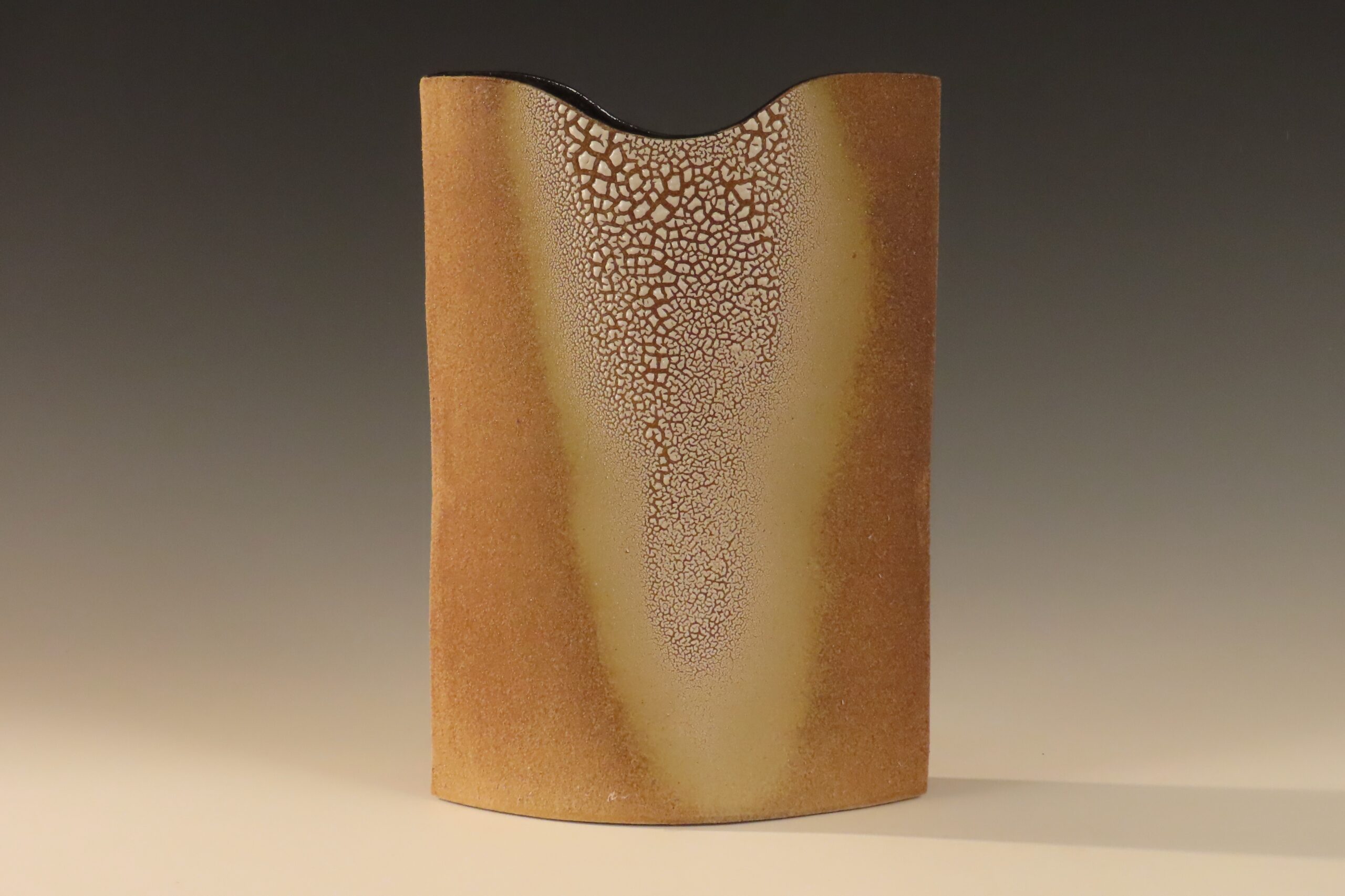
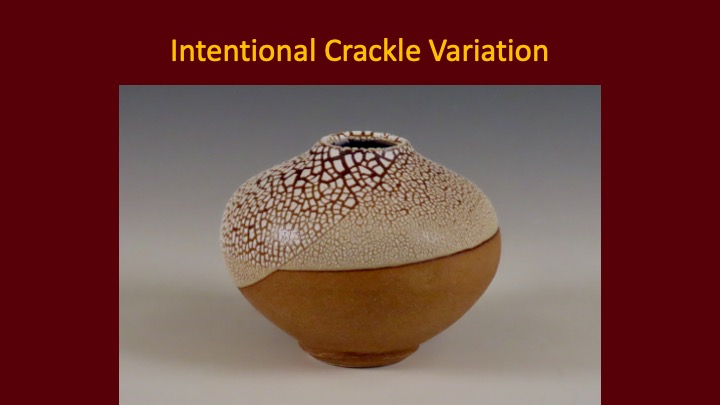
The first new direction is focused on “crawling glazes” or “crackle glazes.” A crawling glaze refers to a type of ceramic glaze that’s designed to crack or “craze” as the piece dries in the air before firing, creating a network of fine lines or cracks on the surface. This process is effectively a controlled form of crazing, which is generally otherwise considered a glaze defect when unintentional. However, in my work, I am featuring the crawling as a texture. I prefer that the crawling is “uniformly random.” I want crawling everywhere the piece is glazed and to appear as consistent random crawl patterns (Figures 5, 6)
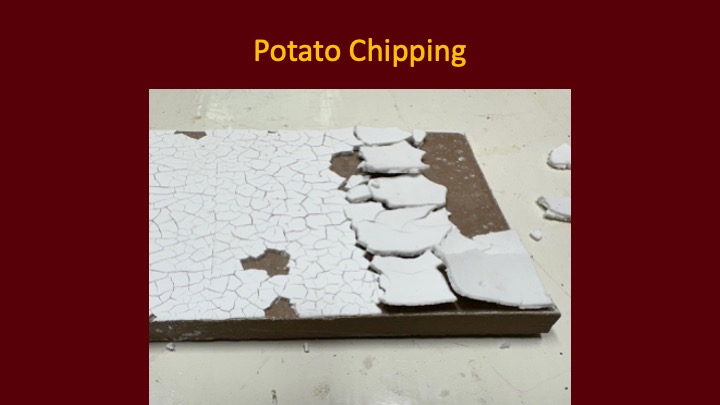
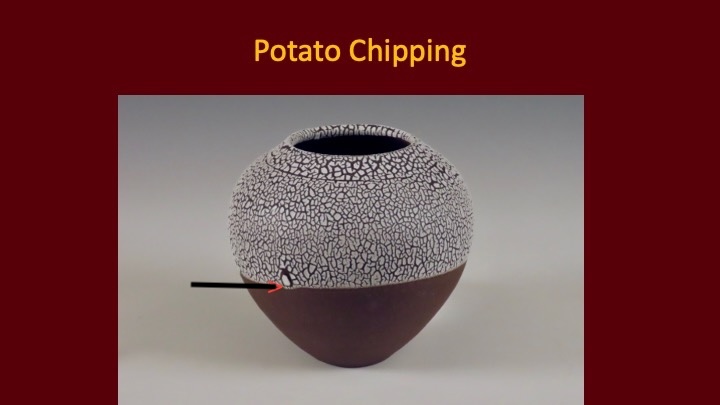
To achieve this, I started with a known formula using nepheline syenite and magnesium carbonate. The challenge is to get medium to large, sharp, clean crawling (islands) without having the glaze fall off or chip. I call this “potato chipping” when the islands of glaze curl up like potato chips, lose contact with the clay surface, and are weakly attached to the clay (Figures 7, 8).
To achieve my texture, I modify the glaze mixture and carefully add a small amount (0.15%) of organic gum. Because the mixture separates quickly it is important to keep this mixture stirred.
Artists often use this glaze to highlight a portion of the piece and their results can be quite variable, often with missing texture. I prefer “uniform” coverage over large areas with no defects. Larger islands of glaze are more difficult because of “potato chipping.” Using underglaze or colored slips, I can accentuate the patterns. Spraying crackle glazes can create additional patterns. (Figure 9) Soon I plan to add colorants to the crawling formula also. I am quite satisfied with the results. (Figure 10)
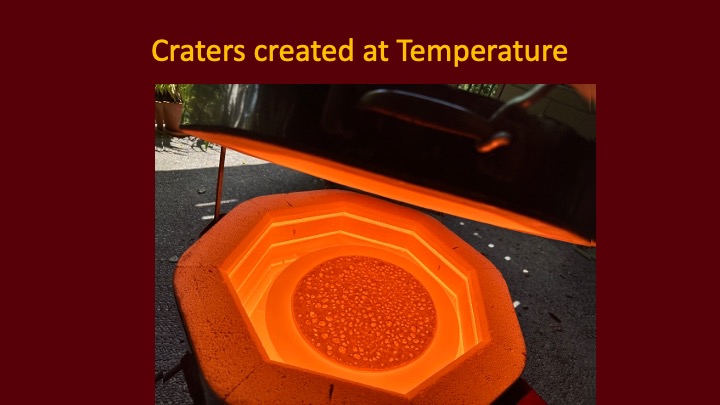
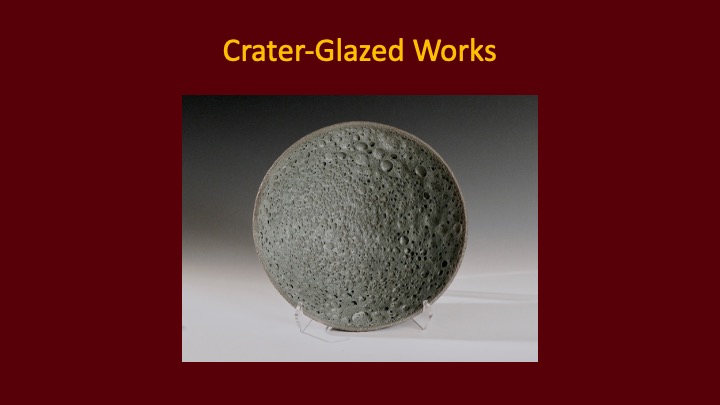
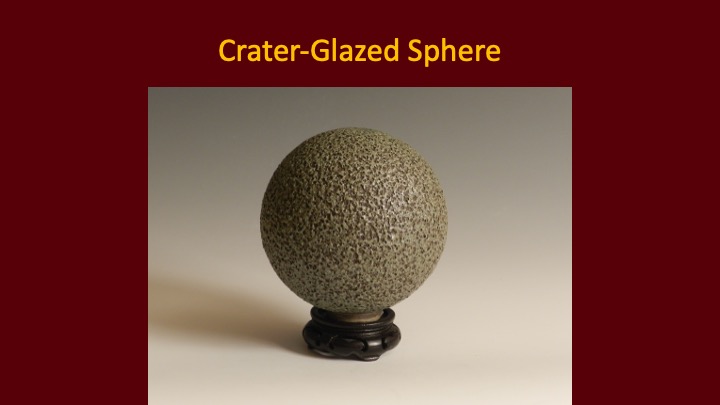
The second more challenging and dramatic glaze is cratering glaze, also referred to as lava or volcanic glaze. The primary ingredient responsible for the cratering effect is silicon carbide (SiC). When the glaze is fired, the SiC reacts with oxygen in the surrounding glaze to form silicon dioxide (SiO2) and carbon dioxide (CO2) gas. This outgassing creates bubbles within the glaze layer.
As the glaze melts during firing, the CO2 bubbles are released and rise to the surface. When these bubbles burst, they leave behind characteristic craters on the glaze’s surface. (Figure 11).
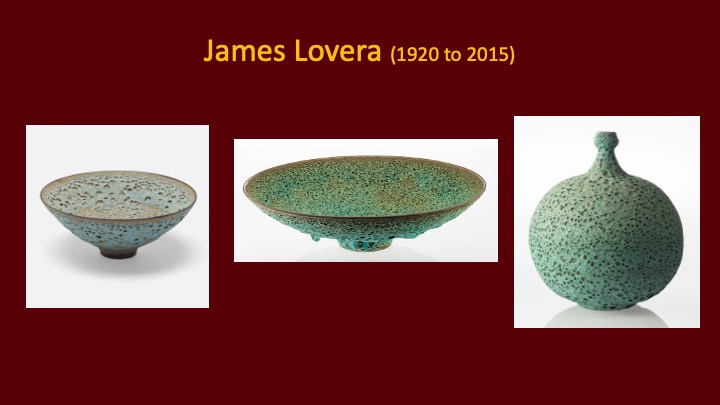
California ceramic artist, James Lovera, very successfully used cratering glazes in his fabulous bowls and platters (Figure 12). He passed away (1920-2015) before I had an opportunity to learn from him.
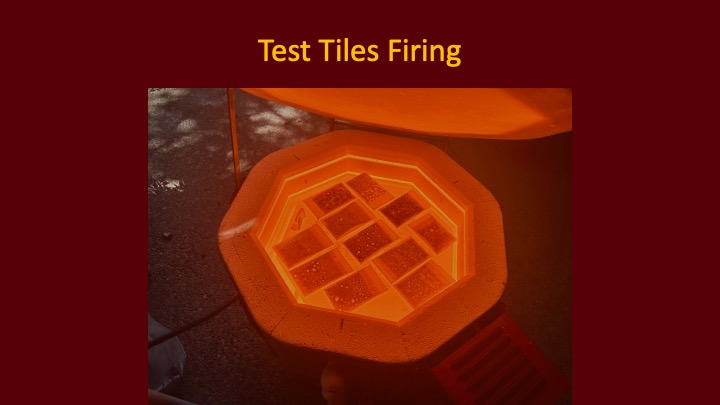
The particle size and density of the craters can be influenced by the particle size and amount of silicon carbide used, the thickness of the glaze application, additives, colorants, and the firing schedule. I performed hundreds of test formulations and combinations, but I found only a modest number of promising results (Figure 13).
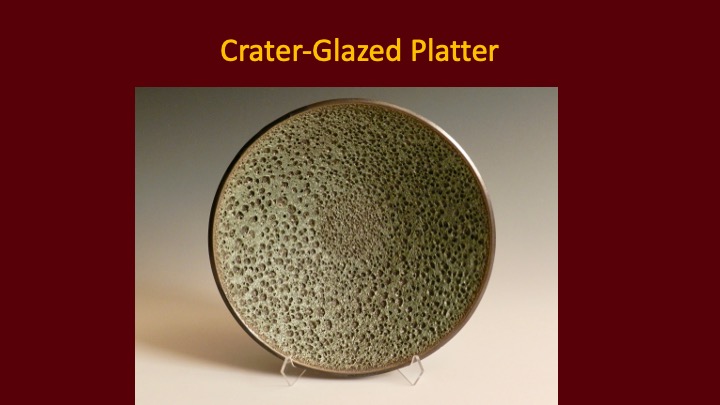
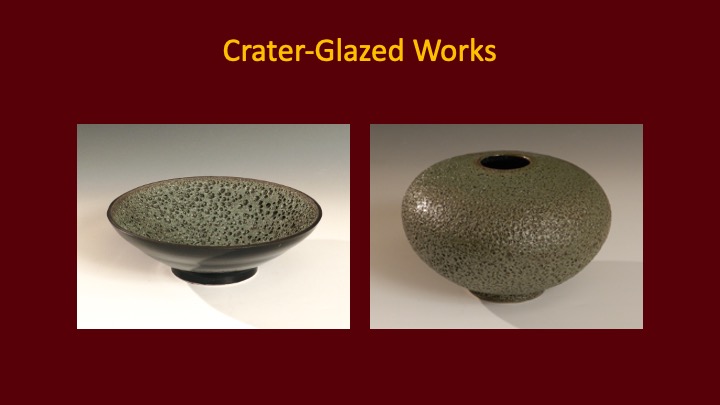
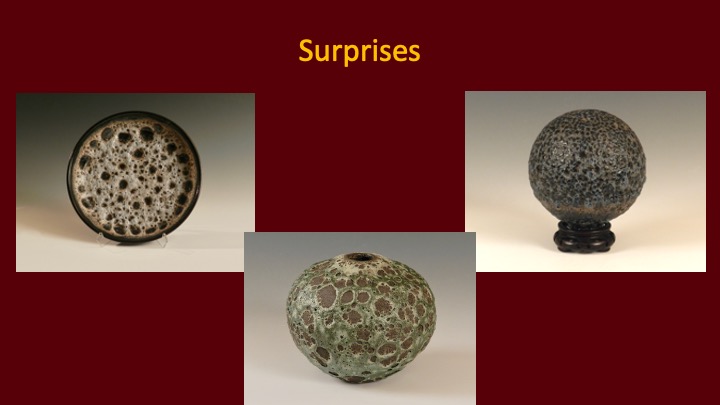
Like James, I seek to create “uniform randomness” in this work as well (Figures 14, 15). My goal is to master not only the size, density and overall cohesive look of the craters, but I also enjoy the variations and surprises (Figures 16), not unlike the experiences with woodfiring. In the near future, I plan to add additional colors to my palette of blue, green, white, tan and black (Figures 17, 18).
I will continue to purse my classic textures as I explore these new glazing effects.
Lee Middleman
+1-650-678-2299